Guides
Which tools a home workshop needs before its first batch of twenty
A first home workshop tool kit, named tool by tool: what to buy, what to borrow from a library or maker space, and the jig worth building first.
What to take away
- Buy for repeatability. A jig is worth more than a sharper blade.
- Borrow the machines you will use twice a year before you buy them.
- Settle dust and power at the bench before the first cut.
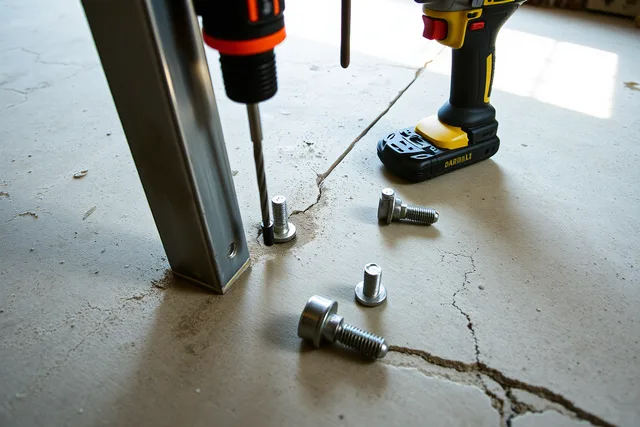
- Clamp or anchor anything that spins, walks or tips.
- Build one prototype before ordering stock or finishing gear.
The kit that earns its footprint
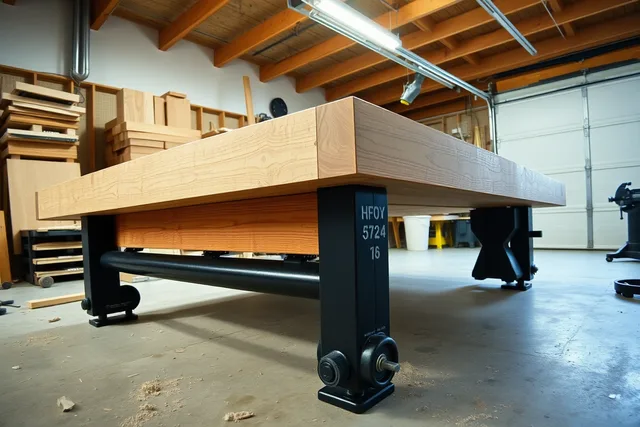
Making twenty of something is a different job from making one. Repetition punishes every tool that is slightly wrong. Anyone building a bench to work on should read what to buy first for a bench commission before buying stock.
| Tool | Why it earns its footprint | Borrow or buy |
|---|---|---|
| Steel rule and carpenter square | Marks that repeat | Buy |
| Utility knife and spare blades | A dull blade is the dangerous one | Buy |
| Corded drill and bit set | Holes in wood and metal | Borrow first |
| Random orbit sander | Even finish across twenty parts | Borrow first |
| Six clamps or more | Glue-ups fail without them | Buy |
| Shop vacuum with a fine filter | Dust at the cut | Buy |
The hand tools cover most of a first run. If you can borrow the drill and the sander for a weekend, do that, then decide.
Borrow the machines you only need twice
Beginners overspend on the digital side, which is also the easiest part to rent. A library card or a maker space pass buys bench time and design software by the hour. Run one batch that way and you will learn which machines you miss.
A bench that shares a room with a car or a washer has a layout problem first. A small-space bench setup covers the order to fix it in.
Example: a bench hook from scrap
A bench hook costs nothing and takes ten minutes. It turns a kitchen table into a cutting station with one hand free.
- Cut a base about 12 in by 8 in from 3/4 in plywood.
- Screw a stop block across one short edge.
- Add a second stop on the other face, set back from the first.
- Hook the base over the bench edge and cut against the near stop.
Jigs cost less than skill
The difference between twenty parts that match and twenty that nearly match is almost never the maker's hand. It is whether a jig existed before the run started. A scrap board with two stops glued to it squares every piece the same way, faster than measuring.
The jig also catches a wrong part before the glue is open. Price the stock before you build it, because a fixture only pays off if you can rebuy the material. The pricing supplies before you order note covers that step.
Dust and power at the bench
Cutting one board is nothing. Cutting two hundred parts is repetitive work with a sharp edge and a tired hand, and no fixture removes that.
- Keep fingers behind the edge line, never across it.
- Support the work on both sides of the cut.
- Change the blade before it starts to drag.
- Stop when your grip tightens.

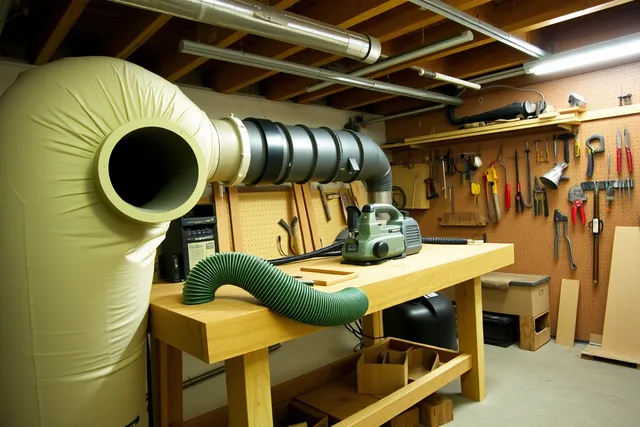
Dust is the larger household problem. A shop vacuum lifts chips at the tool, while the OSHA woodworking guidance treats fine wood dust as a separate collection job with its own airflow needs.
A garage bench usually shares one circuit. NFPA 70 asks for at least one 20-ampere branch circuit for garage outlets, which is a cheap rule to plan around.
Storage that earns the wall
Wall storage beats a wider bench in a one-car garage. A french cleat lets you lift a tool off the surface and set it back with one hand, and how much it holds depends on the screws behind it.
Damp garages charge rent on tools left in the open, and a wet winter makes it worse. Storage habits that slow rust apply to any humid shop, coastal or not.
What not to buy for a first run
Skip branded packaging until you know the finished dimensions. A large saw can wait until you have cut a run by hand and felt the bottleneck. Finishing gear is a second-run problem.
Buy one prototype's worth of stock, not a pallet.