
Reviews
Part of Workshop Ventilation How It Works: Capture at the Source
4 takeaways on workshop ventilation storage
Storing ducting, filters and respirators between jobs: how to store shop ventilation kit, keep duct and hose clean and round, protect filters from crushing.
What to take away
- Store hose hung in wide loops, not folded. A kinked hose stays kinked and costs you airflow forever.
- Filters fail from crushing and damp storage more often than from use. Keep spares boxed, flat and dry.
- Respirator cartridges have a service life that starts when the seal is broken. Store them sealed and dated.
- Dust left in ducting and filters is fuel. Storage that lets it accumulate is a fire question, not a tidiness question.
The ventilation kit is bulky, awkward, and easy to damage in storage. Over a few years, most lost airflow comes from storage damage, not wear.
The decline is gradual and goes unnoticed because nobody measured the starting point. Proper storage costs less than replacement and far less than a system that quietly stops working.
Hose, duct and fittings
Flexible hose deforms permanently. Hang it in loops as wide as the space allows, supported at several points so its own weight does not flatten it. Never store it folded, and never store it under anything.
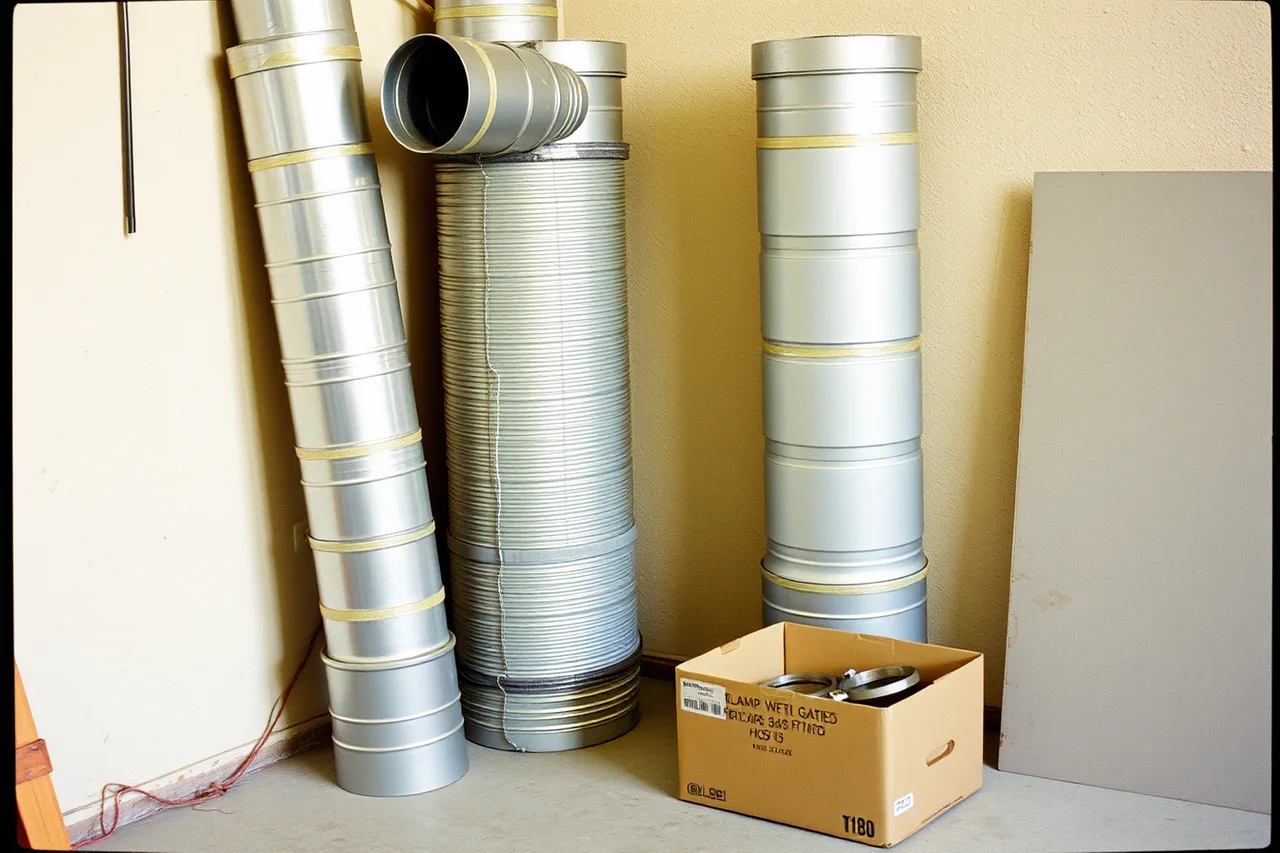
Rigid duct stores best vertically in a corner with the ends taped so nothing nests inside it. Keep fittings, clamps and gates in one labeled box rather than scattered, because the missing clamp is what turns a ten-minute change into an afternoon.
Before storing any section, clean it out. Which brings us to the reason.
Accumulated dust is fuel
A duct or filter packed with fine dust all winter is a fire load sitting in your shop.
The Consumer Product Safety Commission shows how this works with overheated clothes dryers and fires: lint collects in ducts and near a heat source, causing fires. Clearing the run matters as much as clearing the visible trap.
The materials differ and the read-across is not exact, but the mechanism is familiar: fine combustible material accumulating in a duct near equipment that gets warm. Empty bags and drums before storage, clean the filter, and clear the ducting rather than leaving it loaded. Buyers comparing ventilation equipment should weigh how each unit's filters and bags are stored between uses.
Filters and bags
- Store spare filters flat in their boxes, off the floor, away from damp.
- Never stack anything on a cartridge filter. The pleats crush and never recover.
- Label bags and filters with the machine they fit, because part numbers are unreadable after a year in a shed.
- Do not wash a filter unless the manufacturer says you can. Many cannot be wetted without damage.
Respirators need real storage
A respirator stored loose in a drawer collects dust on the sealing surface and takes a set that stops it sealing. OSHA's respiratory protection standards page points to the requirements that cover cleaning, inspection, maintenance and storage of respirators, along with the fit and seal expectations that all of that exists to preserve.
Employers carry those duties. The practical home version is short:
- Store the mask in a sealed bag or container, not hanging on a nail.
- Store it so the facepiece is not deformed by its own weight or by anything on top.
- Keep cartridges sealed until use, and write the date you opened them on the cartridge.
- Inspect the straps and valves before each use, and replace a mask that no longer seals.
Our ventilation overview covers how these pieces fit together, and our guide to storing shop materials in a garage covers everything else in the room.