Reviews
Part of The real cost of a home workshop, including the bills nobody quotes
Cheap workshop surfaces compared: which ones are worth building
Low-cost workshop surfaces compared: sheet goods on a frame, salvaged tops, sacrificial layers, and the composite panel question worth knowing about.
What to take away
- The cheapest good top is two layers of 3/4-inch Baltic birch plywood or MDF on an over-braced frame. Mass and flatness cost almost nothing; rigidity costs a little lumber.
- A sacrificial layer of 1/8-inch hardboard turns damage into a maintenance item. It is the single best value in bench building.
- Salvaged tops, a solid-core door or reclaimed bowling lane maple, are cheap and heavy, and they carry unknown hardware. Budget a blade you are willing to ruin.
- Composite panels such as MDF, melamine-faced particleboard and OSB release formaldehyde, more so when freshly cut. Ventilate while you machine them.
You do not need an expensive bench. You need a flat, heavy, rigid one, and every one of those properties is available at low cost if you build rather than buy. The cheap workshop surfaces below are compared on price, weight and how each one fails.
What the cheap options actually cost you
Cheap because
- Two layers of 3/4-inch Baltic birch plywood on a braced frame
- A commodity sheet, typically $65 to $110 for a 5x5 panel
- Two layers of 3/4-inch MDF
- Flat and cheap, typically $40 to $60 a 4x8 sheet
- Salvaged solid-core door, sold at Habitat for Humanity ReStore
- Typically $20 to $80, sometimes free
- Reclaimed bowling lane maple from a salvage dealer
- Sold as offcuts, typically $10 to $25 a square foot
- Harbor Freight Yukon 60-inch workbench
- No build time, often $200 to $300
- Husky or Gladiator steel-frame bench with a plywood top
- Frames turn up cheaply used, often $100 to $300
- Melamine-faced particleboard
- A smooth face for typically $35 to $55 a sheet
You pay in
- Two layers of 3/4-inch Baltic birch plywood on a braced frame
- Roughly 70 lb of top, and edge banding to protect the corners
- Two layers of 3/4-inch MDF
- Dust, and sag when bearers sit more than 24 inches apart
- Salvaged solid-core door, sold at Habitat for Humanity ReStore
- Hollow cores are useless; solid ones hide hardware
- Reclaimed bowling lane maple from a salvage dealer
- Weight, transport and cutting difficulty
- Harbor Freight Yukon 60-inch workbench
- Light frames rack under real work
- Husky or Gladiator steel-frame bench with a plywood top
- Noise and unforgiving edges
- Melamine-faced particleboard
- Formaldehyde, and a core that crumbles at a screw
The consistent winner for a first shop is two glued layers of 3/4-inch sheet goods on a frame braced diagonally or built with a full lower shelf. It is flat, it is heavy, and every part is replaceable.
Cheap workshop surfaces compared
Baltic birch plywood
- Typical cost
- $65-$110
- Main drawback
- 70 lb top
- Best for
- Moving bench
MDF
- Typical cost
- $40-$60
- Main drawback
- Dust and sag
- Best for
- Flat cheap top
Salvaged solid-core door
- Typical cost
- $20-$80
- Main drawback
- Hidden hardware
- Best for
- Quick build
Melamine particleboard
- Typical cost
- $35-$55
- Main drawback
- Crumbles at screws
- Best for
- Smooth face
Pick Baltic birch plywood if the bench will move or if screws will bite into the edges. Pick MDF for a bench that stays in one spot, since it is flatter out of the stack and cheaper per sheet.
Spend the money on rigidity
A cheap top on a wobbly base is unusable. A cheap top on a rigid base is a bench, and the frame decides which one you get.
Put the small budget into the base. Four-by-four legs, doubled 2x4 rails, a full lower shelf you can load, and either diagonal bracing or a fixed back panel so the base cannot go out of square under sideways force.
Then add mass. Sandbags, offcuts or a slab of paving on the lower shelf all stop the bench moving when you push against it. A 60 lb bag of concrete mix, typically $5 to $8, is the cheapest ballast in the store.
The sacrificial layer earns its keep
Screw a thin replaceable sheet on top of the real surface. Drill through it, cut on it, spill glue on it, and replace it when it looks bad. Countersink the fasteners well below the surface and keep a sketch of where they are, so a blade never finds one.
1/8-inch hardboard, sold as Masonite, is the usual choice at roughly $12 to $20 for a 4x8 sheet. It is smooth, staples down easily, and lifts off in one piece once the top layer is chewed up.
This is the difference between a bench you protect and a bench you use.
The composite panel question
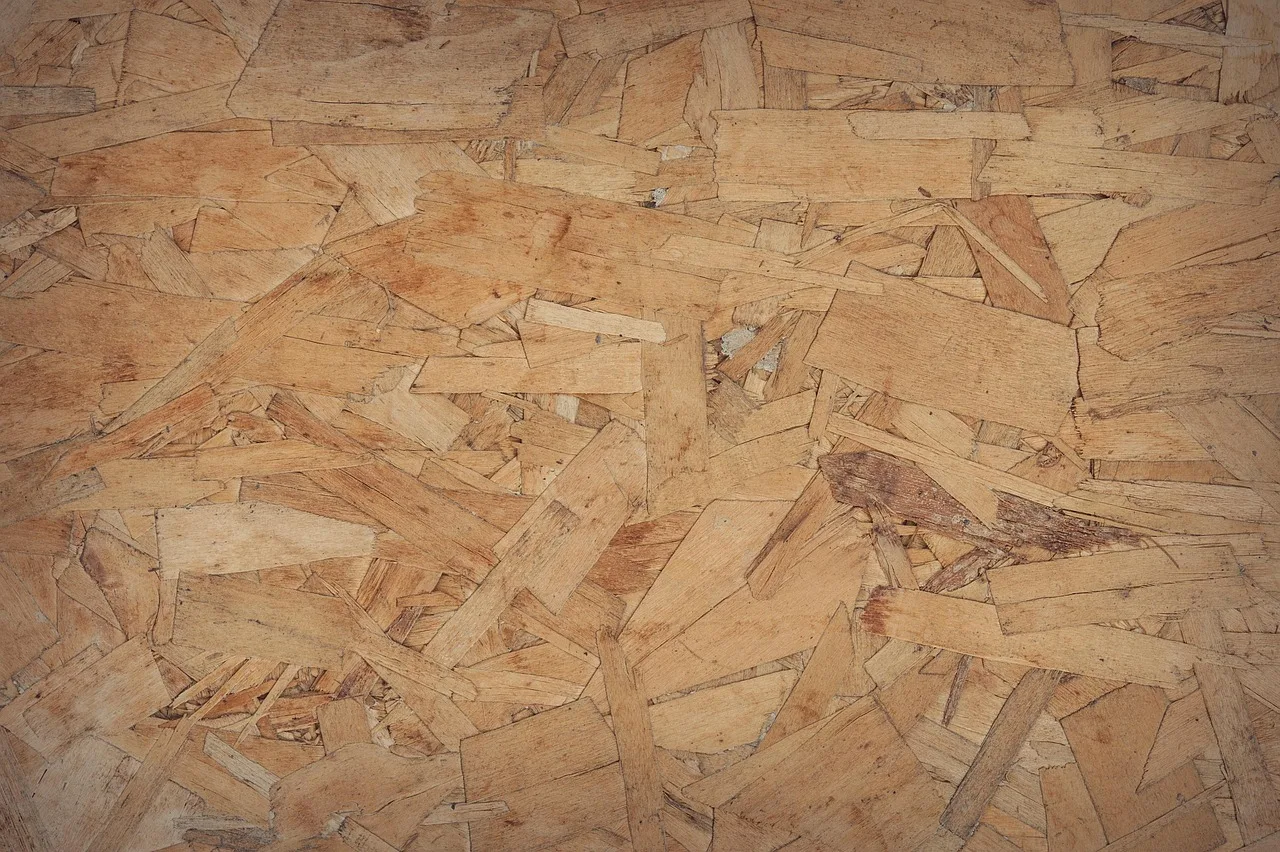
Most cheap tops are engineered panels bonded with resins that release formaldehyde, particularly when the material is freshly cut or sanded. MDF, particleboard, melamine-faced board and OSB all belong to that group, and all four come in standard 4x8 sheets.
Panels sold in the US must meet TSCA Title VI emission limits and carry a compliance label. That is a floor, not a clean bill of health.
The federal formaldehyde standard sets exposure limits, monitoring and control requirements for workplaces where formaldehyde is present, and lists the irritation and respiratory effects that drive them.
It does not regulate a hobbyist cutting a sheet at home. It does tell you what the substance does, which is enough reason to cut outdoors or with extraction running and to let a new top air before you shut the room up.
Unplug before you change anything
A cheap bench often has a mounted grinder, sander or small saw. Unplug it before changing a wheel, belt or blade.
The workplace version is the control of hazardous energy standard, which requires isolating and securing energy sources before servicing so a machine cannot start unexpectedly, and employers carry that duty. At home, the same idea costs one second and removes the worst failure mode on a bench.
Our guide to choosing materials on a budget covers what to buy, and our cost framework covers where a bench sits in the wider budget.