Reviews
Part of Workshop layouts planning starts with clearances, not furniture
Workshop layout basics worth buying first: wheels, light and support
Mobile bases, task lighting and load-rated shelving come before another machine, because they make the tools you own reachable and safe to use.
What to take away
For most small shops, the workshop layout basics worth buying first are wheels, light and support, not another machine.
- A mobile base turns one clearance zone into two. Measure the machine, then buy a base rated above its weight, not at it.
- Outfeed support set level with the saw table keeps hands off the blade and boards off the floor.
- Task light at the bench beats more ceiling light. A raking light from the side shows a surface a ceiling fixture flattens.
- Fixed outlets at the machines are the answer. Cord reels are a stopgap, and flexible cord is not permanent wiring.
- Shelving fails at the anchor, not the shelf. Know what the wall is made of before you load it.
- Compare listed specs, not catalog photosBora Portamate PM-1100 and PM-2500 bases, a Ridgid Flip Top stand, an OttLite or Luxo bench lamp, a Gladiator or Husky steel rack.
First: wheels under whatever blocks a path
The cheapest capability you can buy in a small shop is a mobile base under the machine that blocks the walkway. Move it and the same floor serves two stations.
Buy for the rated load, not the footprint. A cast-iron jointer or cabinet saw wants a base rated well above its shipping weight, with a positive lock rather than friction.
Measure the base of the machine, not the table. Note the width and depth across the feet and the weight printed on the crate label. Then buy a base longer and wider than those numbers and rated above that weight.
Bora Portamate's PM-1100 kit is rated 500 lb and adjusts from roughly 12 in to 36 in, typically $60 to $90. The PM-2500 is rated 1,500 lb for cabinet saws and jointers, typically $200 to $260.
Rockler's All-Terrain Mobile Base uses larger wheels than most kits to cross cords and door tracks, typically $130 to $170. Woodcraft and Lee Valley sell steel and poly bases in the same class.
Grizzly and Shop Fox list rated capacities on the box, so compare those numbers before you order.
Second: outfeed and infeed support
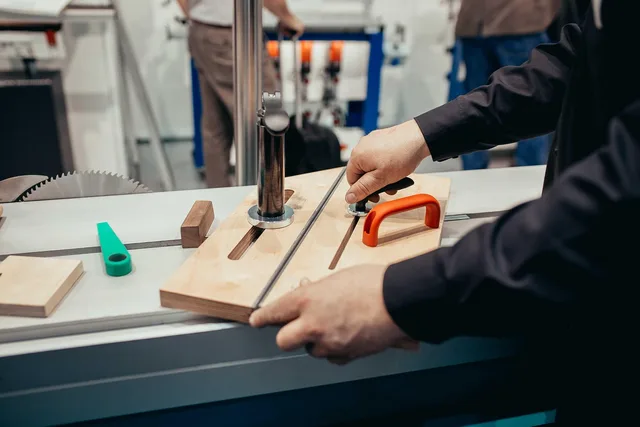
A saw without outfeed support is a saw you will use badly. Anything holding the far end of a board at table height counts.
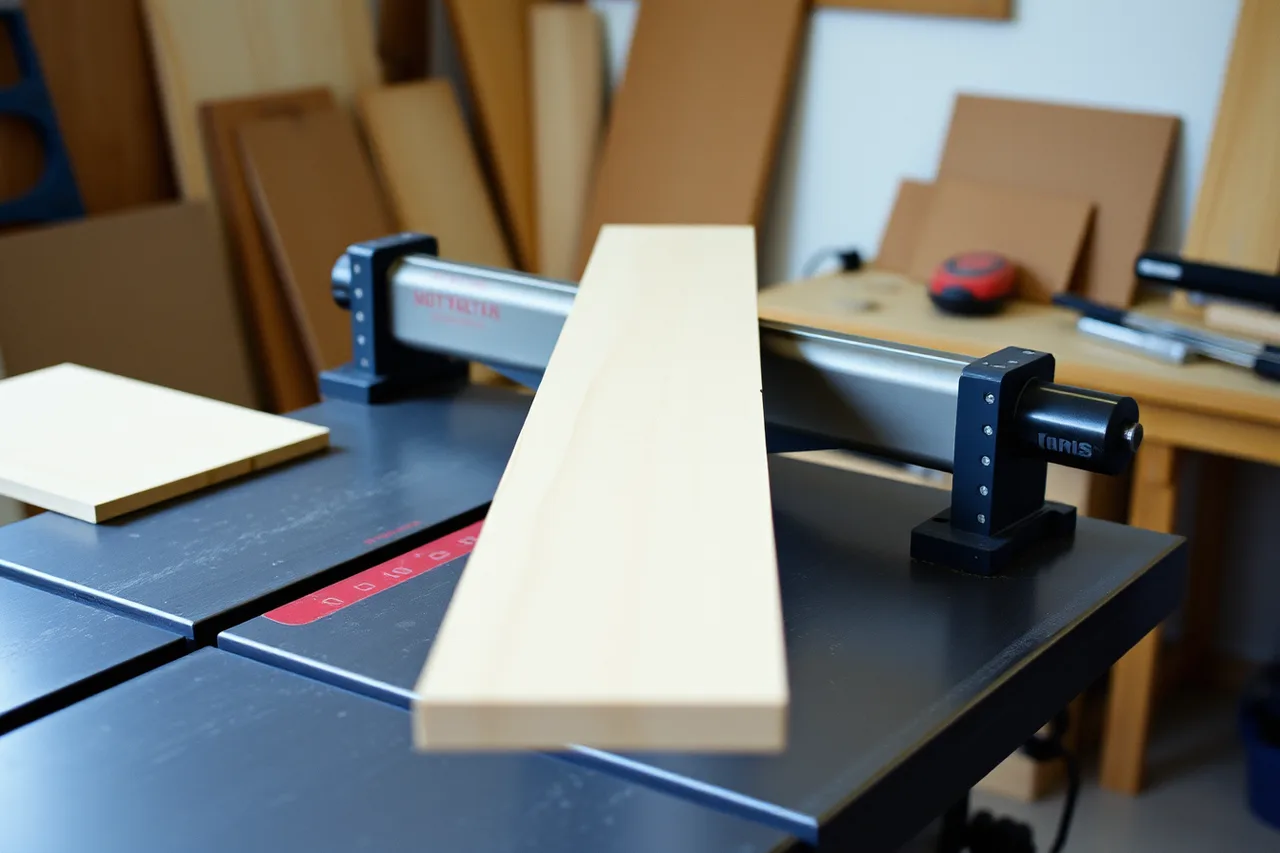
Ridgid's Flip Top portable work support (model AC9934) folds flat, adjusts to match a saw table, and is listed around 400 lb; typically $60 to $90 at Home Depot.
Worx's Pegasus folding work table clamps boards with its own dogs and is listed at 300 lb in table mode, typically $150 to $200. Roller stands from Rockler and Lee Valley run about $40 to $80.
A folding table shimmed level or an assembly bench that doubles as outfeed both work too.
Height is the whole job: a stand set a quarter inch low lets the board dip and the cut wander. This is the purchase that does most to cut awkward reaching, and reaching is where control is lost.
Third: light where the work is
General overhead light flattens everything. Add a task light at the bench and a second, movable one you can bring in at a low angle to check a surface. Shadows are information, and a single ceiling fixture removes them.
For bench work, a common target is 50 foot candles, or about 500 lux, at the surface. Fine marking and layout justify about double that.
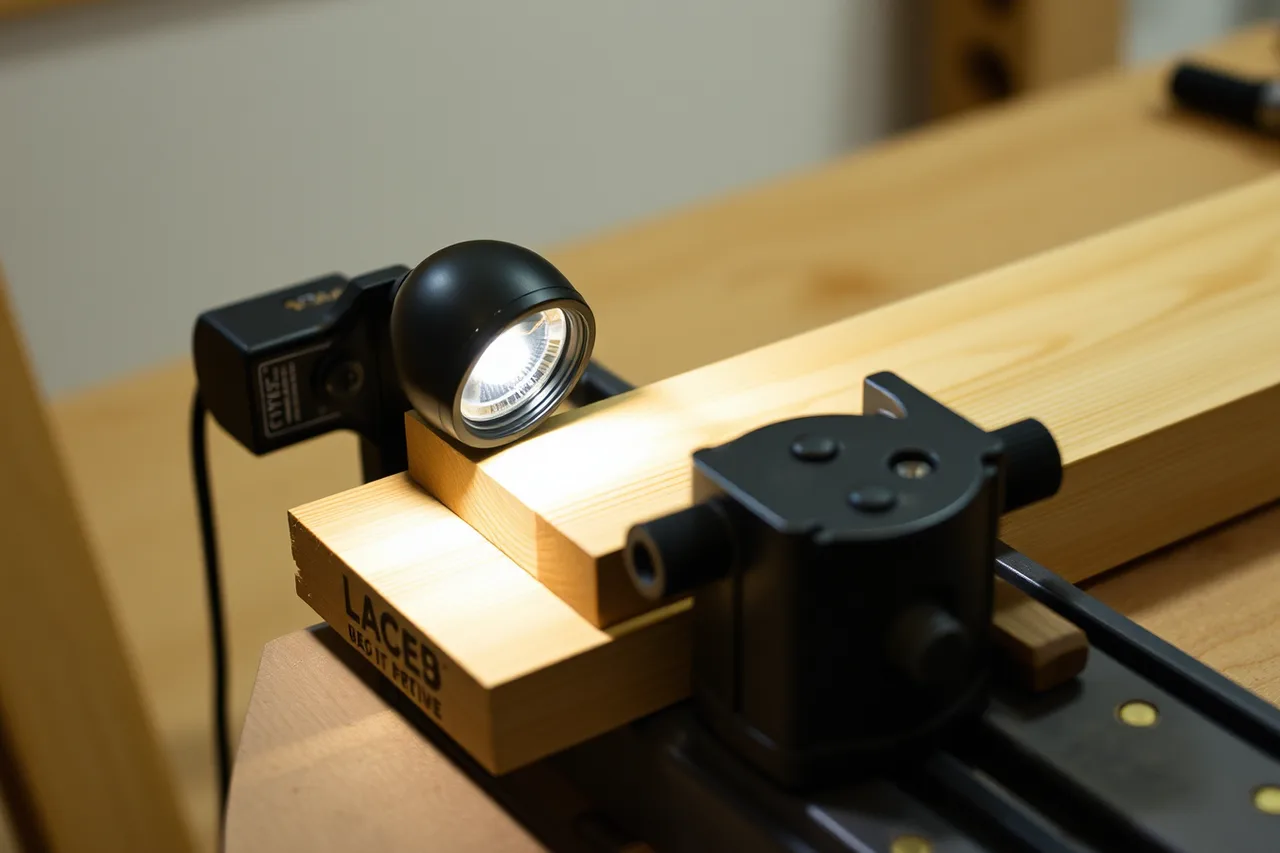
Look at the color rendering, not just the lumen count. OttLite rates its bench and desk lamps at 96 CRI, which makes pencil lines and grain readable; models run about $40 to $150.
IKEA's Tertial clamp lamp costs roughly $15 to $20 and takes a standard bulb, so you choose the CRI. Luxo's L-1 swing-arm lamp holds the position you set, typically $150 and up.
Magnetic-base LED work lights from Lee Valley and Rockler clamp anywhere. Harbor Freight's Braun folding light is typically under $30 and has a magnetic base.
Fourth: power that does not run across the floor
The federal rule on flexible cords and cables says flexible cord is not a substitute for fixed wiring. It must not run through walls, ceilings, doorways or floors, or be concealed behind building surfaces.
Reelcraft and Coxreels build the industrial cord reels used in pro shops; a 12-gauge, 40 ft reel typically starts near $200.
The rule governs workplaces, not a private garage, but it describes exactly how home shop wiring goes wrong. Have a licensed electrician add circuits and outlets at the stations you actually use, sized to the National Electrical Code edition your state or city applies.
Wiremold's Plugmold surface raceway spaces outlets a few inches apart along a wall; a 3 ft strip typically sells for $30 to $70.
Retire any cord that has been taped or has a warm plug.
Fifth: storage rated for the load
Shelving is where a layout gets dangerous. Construction storage rules require material be stacked and secured against sliding or collapse, and storage areas kept free of accumulation.
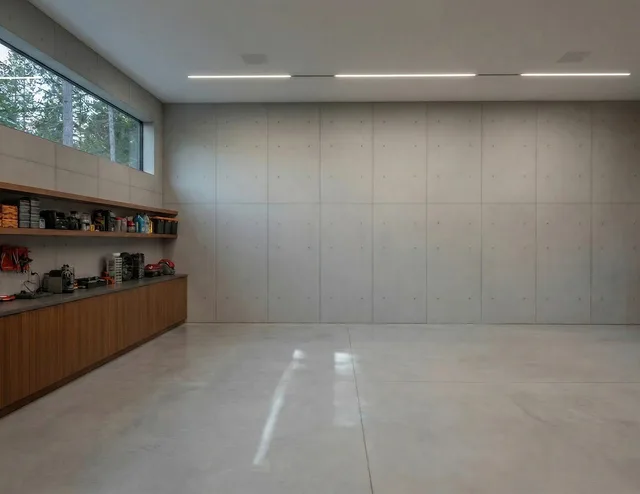
In a garage, that means three checks: know what your wall anchors are fixed into, keep heavy items low, and never store sheet goods where they can slide out at the bottom.
Gladiator and Husky welded steel racks publish per-shelf ratings, commonly 500 lb to 800 lb per shelf; a four-shelf unit typically runs $150 to $300.
Franklin Sensors' ProSensor M210 stud finder reads a wide band and shows stud edges, typically $50 to $70, which beats guessing before you drill.
TOGGLER's SnapToggle anchors hold far more than a plastic plug, and no anchor in half-inch drywall will carry a loaded rack. A lumber rack bolted into studs carries far more than a bracket in drywall, and a French cleat wall spreads load across the whole run.
Storage rated for the load
| Purchase | Floor space returned | Typical mistake |
|---|---|---|
| Bora Portamate PM-1100 mobile base | High | Rated load ignored |
| Ridgid Flip Top work support | Medium | Set at the wrong height |
| OttLite or Luxo bench lamp | None, but improves accuracy | Only one light source |
| Braun magnetic LED work light | None, but shows defects | Bought after the mistakes |
| Wiremold Plugmold outlet strip | None, but removes cords | Treated as a substitute for a circuit |
| Gladiator or Husky steel rack | High | Anchored into drywall alone |
| Lumber rack on studs | High | Built for stock you do not own yet |
The pricing side of these decisions is covered in our guide to costing layout supplies, and the measurements behind them sit in our layout planning guide.
Common questions
Should I buy a mobile base or build one?
Buy if the machine is heavy or oddly shaped, because the casters and the lock are the hard part; the Bora Portamate PM-1100 is the common starting point. Build for light bench-top tools on a simple frame, where a plywood deck and four locking casters are enough.
How much lighting is enough?
Enough that you can read a pencil line on dark stock without leaning in. Add light until that is true, then add one movable lamp for raking light across a surface.
What should I not buy yet?
A full storage wall. Build storage once you know what you own and where it is used, or you will shelve the wrong things at the wrong height.